Grinder, Brew Unit or Milk Line: Fixing the Wolf Coffee System
A built-in Wolf coffee system is a small factory behind a cabinet front: a grinder, a brew unit, a water heater and a milk line, working in sequence for every cup. When the drink comes out wrong, the symptom usually tells you which station stopped. Call 24/7 at (872) 239-3565 or book a visit.
Built-in bean-to-cup coffee machines
Call, 24/7(872) 239-3565Why is my Wolf coffee system not grinding?
If the grinder is silent, or whirs without delivering grounds, look for an empty or bridged bean hopper, oily beans clogging the chute, a small stone caught between the burrs, or burrs worn smooth. Refill with fresh, less oily beans and check the hopper. A grinder that hums but will not turn should be switched off and inspected.
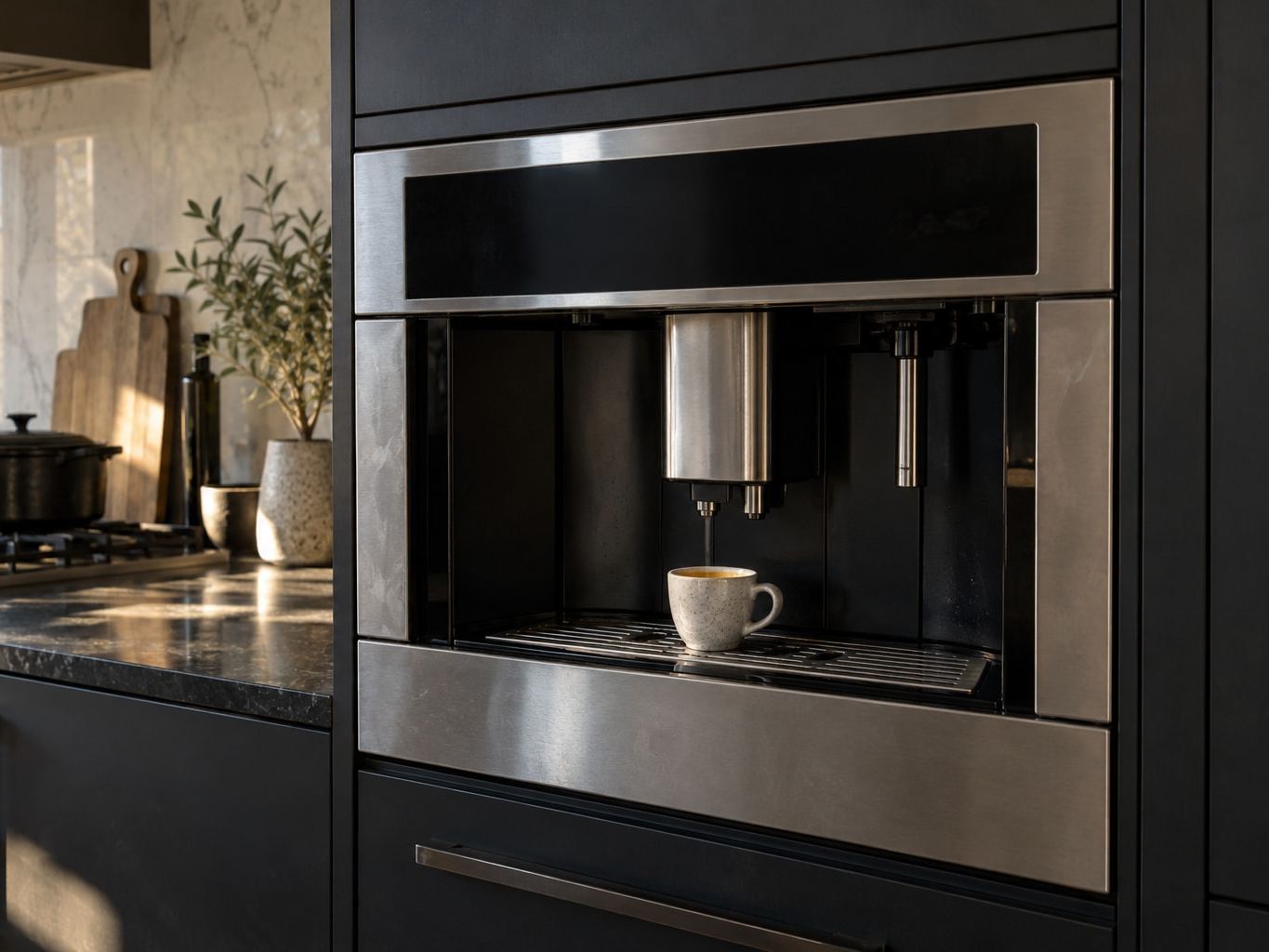
Which station stopped working
Every cup travels the same path: beans to grinder, grounds to brew unit, heated water through the coffee, then milk if you asked for it. The symptom shows where the line broke.
- Grinder runs, but no grounds reach the brew unit
- Clogged bean chute, worn burrs or a foreign object in the grinder
- Thin, watery coffee with no crema
- Grind set too coarse, a short dose, or water bypassing a worn brew unit seal
- Drinks come out lukewarm
- Scale in the heating path, a heater fault or a temperature sensor out of range
- Milk sputters, stays flat or barely flows
- Dried milk in the frother, a blocked air intake or a kinked milk tube
- Water under the machine or in the cabinet
- Water tank not seated, an overfull drip tray, a tired seal or a split internal hose
- A message that keeps coming back
- Tray or tank sensors, a counter that was not reset, or the control board
Two minutes of notes before you call
These details save a round of guessing on the phone and on the visit. For the daily cleaning routine itself, see our coffee system care guide.
- Write down the exact wording of any message on the display, and when it appears: at start-up, mid-drink or after a cycle.
- Note when the last descaling cycle ran and whether it finished, or was stopped partway.
- Which drinks are affected: coffee only, milk drinks only, or hot water as well?
- Is the grinder making its usual sound, a new sound, or no sound at all?
- Where the water shows up: in the drip tray, on the counter, or in the cabinet below.
- The model and serial number from the rating label, if you can see it without tools.
Why is my Wolf built-in coffee maker leaking?
Most leaks start at the water tank seat, an overfull drip tray or grounds container, or a seal on the brew unit. Inside the housing, a split hose or a valve crusted with scale can drip into the cabinet. Empty the tray, push the tank and the brew unit firmly back into place, and if water still appears under the machine, unplug it and book an inspection.
From symptom to module
The technician starts with the most likely module and moves down the line only if the first one checks out.
| Symptom | Check first | Next suspect |
|---|---|---|
| No grounds, or grinder silent | Bean hopper and chute | Grinder motor or burrs |
| Weak, watery coffee | Grind setting and dose | Brew unit seal or pump pressure |
| Lukewarm drinks | Scale in the heating path | Heater or temperature sensor |
| Flat or sputtering milk | Milk tube and air intake | Frother valve or milk system parts |
| Water under the machine | Tank seat and drip tray | Internal hose or brew unit seal |
| Descale prompt returns right away | Water hardness setting | Flow meter or control board |
| Will not start a drink | Brew unit position and tray sensors | Brew unit drive or control board |
What does an error message on my Wolf coffee system mean?
Many messages are care prompts, such as descale, clean, or empty the tray, and they clear once the task is done. A message that comes straight back after the task, or one that stops brewing altogether, usually points to a sensor, the brew unit or the heating circuit. Write down the exact wording before calling; it narrows the diagnosis.
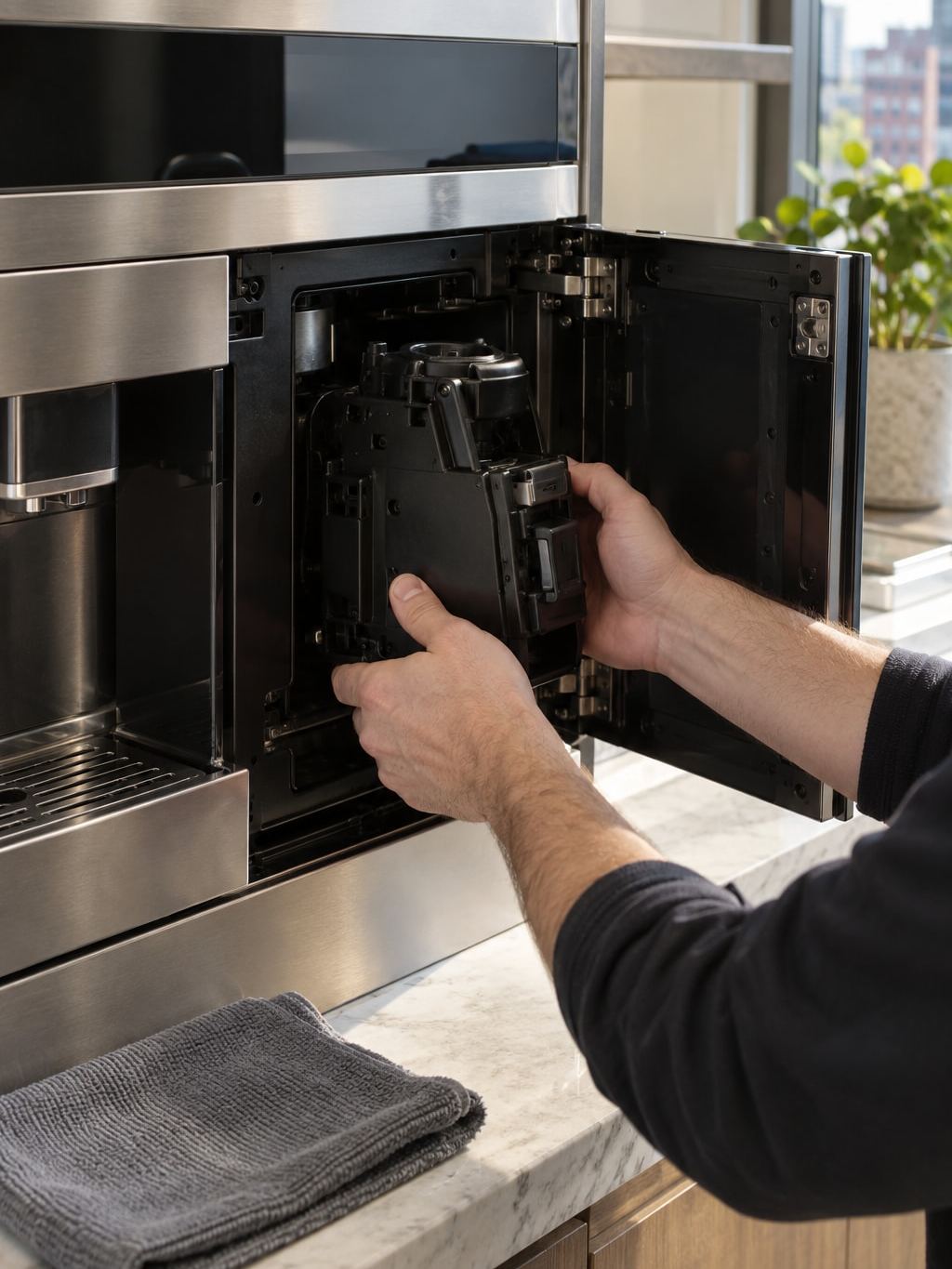
Chicago water, scale and wear
Chicago tap water is moderately hard, and every cup leaves a trace of that mineral inside the machine. Scale settles in the heater, on valves and in narrow passages, where it insulates the heating path and slows the flow. The first signs are drinks that run cooler than before, a pump that sounds busier, and a descale prompt that seems to arrive earlier each time.
With daily use, a descaling cycle every two to three months keeps that in check. The machine's prompt depends on the water hardness entered at installation, so if that setting was skipped or guessed, the reminders can come too late. If the reminders seem late, ask the technician to look at that setting during the visit.
The grinder wears at its own pace. With daily use the burrs usually need replacing roughly every two to three years. Worn burrs produce uneven grounds, which shows up as a sour, thin cup even when the grind setting has not changed. If the steam oven next to your coffee system is also showing signs of scale, see steam oven repair; our FAQ covers general questions about visits.
Asked about built-in coffee repairs
- How often does a Wolf coffee system need descaling?
- With daily use, about every two to three months, or whenever the machine asks. Let the cycle run to the end; stopping it partway can leave descaling solution in the lines.
- When do the grinder burrs need replacing?
- Roughly every two to three years of daily use. Signs include a louder or rougher grinding sound, uneven grounds and coffee that tastes thin even after you adjust the grind.
- Why does my coffee taste bitter or burnt?
- Usually over-extraction: a grind set too fine, a cup size too long for the dose, or very dark, oily beans leaving residue in the grinder and brew unit. Try a coarser setting and fresh beans first. If the taste stays, the water temperature or the brew unit needs a look.
- Is it worth repairing a built-in coffee machine rather than replacing it?
- A diagnosis comes before that decision. Seals, hoses, the brew unit and the grinder are serviceable, and a replacement has to fit the same cabinet opening. Once the cause is known you get the exact price and can decide.
- What can I safely do myself?
- Empty the drip tray and grounds container, wash the milk parts as the owner's manual describes, rinse the tank, and start the built-in cleaning and descale programs. Anything behind the panels, such as the heater, the pump, internal hoses and the electronics, is for a technician.
- Can the same visit cover my steam oven?
- Yes. Mention it while booking so the technician sets aside time for both appliances. Coffee systems and steam ovens often sit in the same column of cabinets and both suffer from scale. The $89 visit fee is paid once, not per appliance; each repair is priced after inspection, and nothing is fixed without your approval.
- What does a coffee system repair cost?
- You pay $89 for the visit itself, and that amount comes off the bill when you approve the repair. The technician quotes the exact figure only after opening up and testing the machine. Our pricing page explains what shapes it.