Wolf Range Repair: Find Out Which Half Has Failed
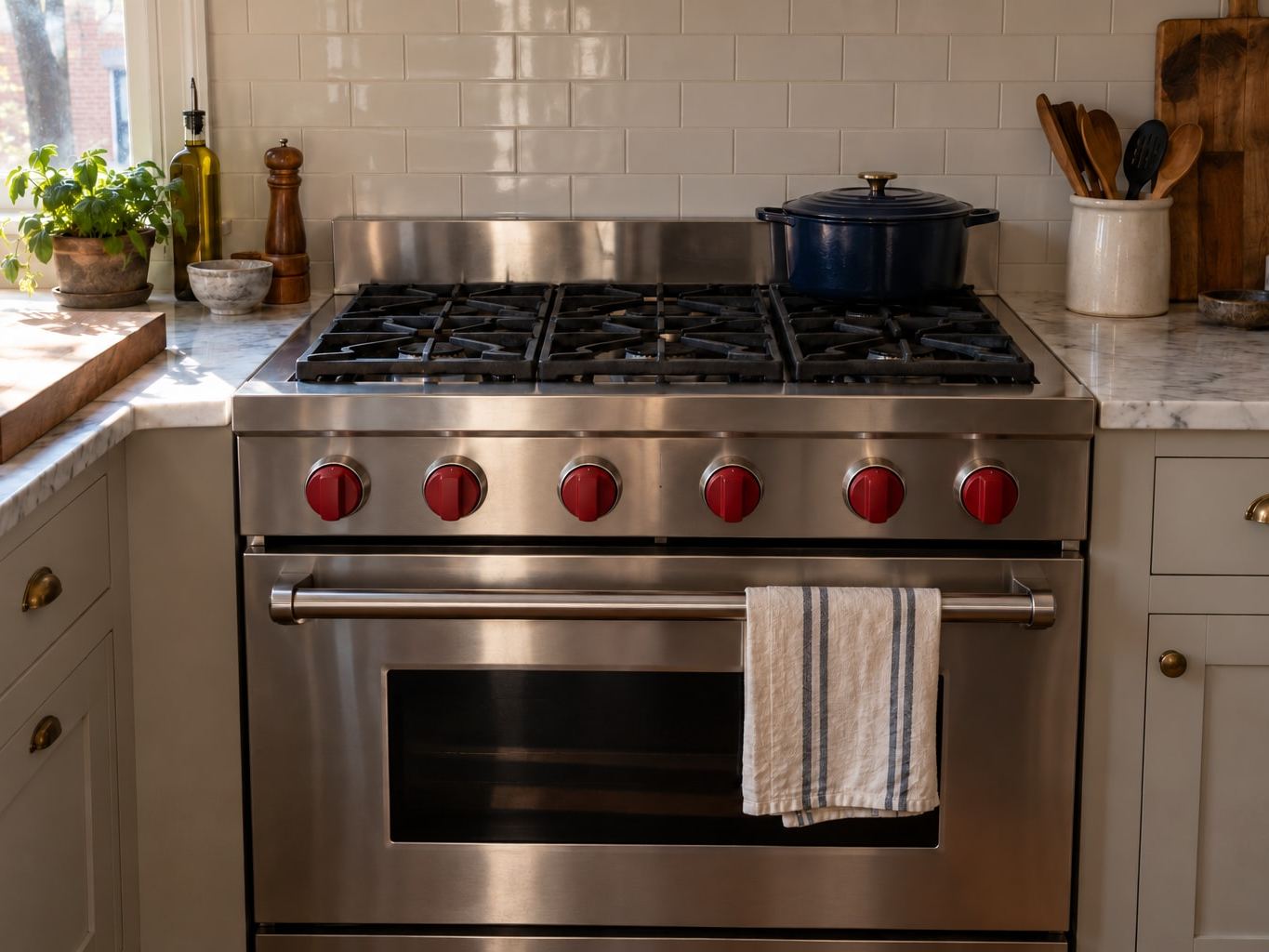
Inside the stainless shell of a Wolf range sit two separate machines: the burner deck, which always runs on gas, and an oven cavity that burns gas on all-gas models and uses electric elements on dual-fuel ones. Most owners call us with one sentence — "the range is broken" — but the fix depends entirely on which half is misbehaving. This page helps you sort that out before the technician arrives, so the $89 visit goes straight to the right parts. Our phone line is staffed 24/7, and technicians are out daily, 8:00 AM to 6:00 PM.
Gas, dual-fuel and all-gas ranges
Call, 24/7(872) 239-3565Top or bottom: match the symptom to the section
Start by noting where the trouble lives. Problems on the burners, griddle or charbroiler point to the gas surface; problems with baking, roasting or the clock point to the oven and its controls.
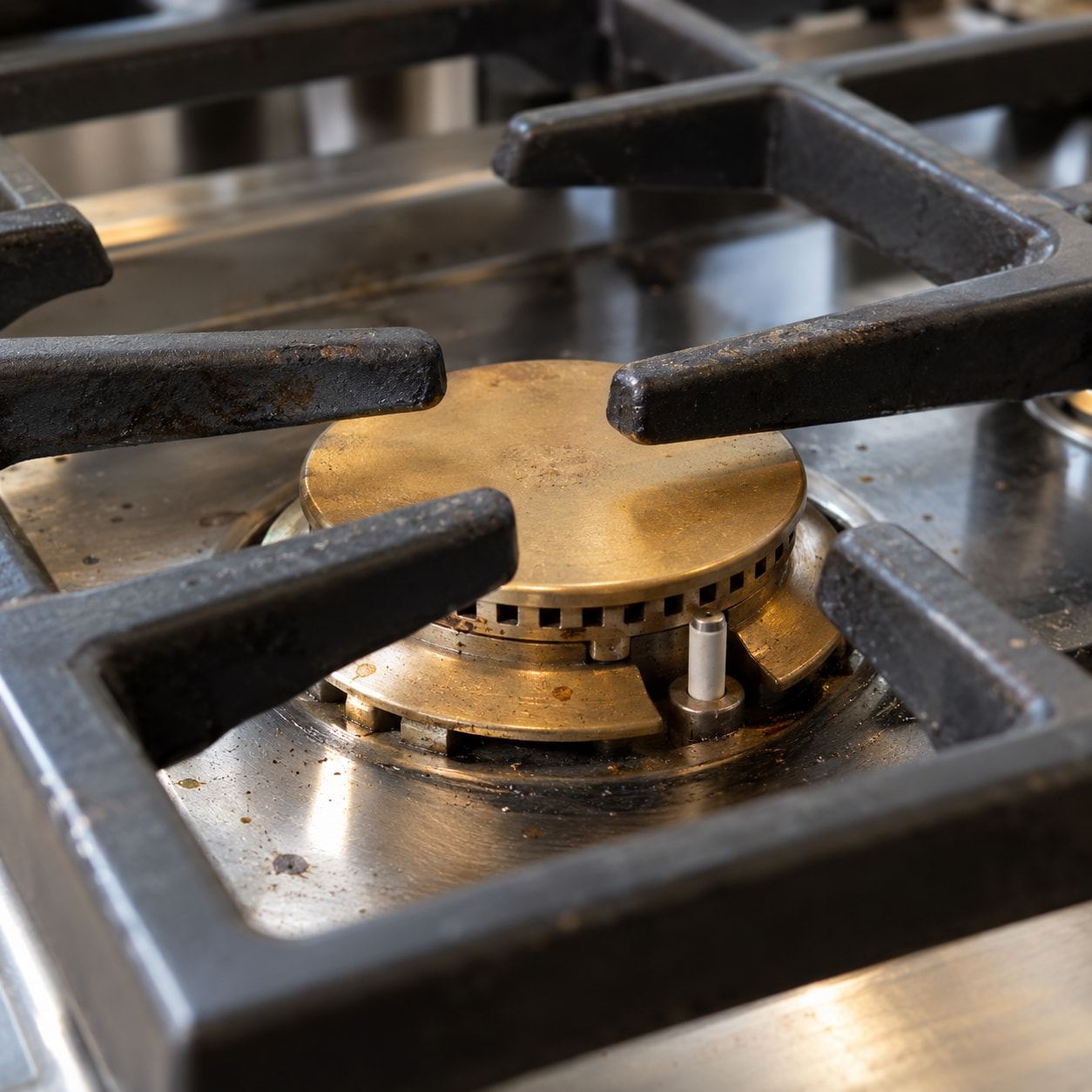
- A burner ticks and ticks but no flame appears
- Moisture or spill residue around the igniter, a worn electrode, a cap knocked out of line or a tired spark module
- Flame lights, then goes out the moment you release the knob
- A thermocouple or flame-sensing part that no longer proves the flame (common on griddle, charbroiler and some oven burners)
- Cakes dome on one side, roasts brown unevenly
- Convection fan, bake element or gas oven burner, or an oven probe giving false readings Read more: wall ovens
- Knobs and trim above the oven turn hot to the touch
- A gasket that has flattened or split, or door hinges that have lost their spring
- Griddle has a cold zone or the charbroiler barely chars
- Partly blocked burner ports, a failing thermostat or an infrared element losing output
- Display goes dark, the oven trips off, or an error code appears
- Thermal fuse, control board, wiring or a knob switch; the code narrows it down
- The surface burners alone act up on a separate cooktop or rangetop
- Same gas logic, different appliance Read more: cooktops & rangetops
What makes a Wolf range burner click without lighting?
In most cases the spark fires but never meets a proper gas stream: pasta water soaked the igniter, the cap got nudged sideways during cleaning, or the ports are crusted after a boil-over. Give the burner an hour to dry and seat the cap flat. Still ticking with no flame means the electrode or spark module should be tested.
Gas safety
If you smell gas, stop troubleshooting
A gas smell near a range is not a repair question. Do not touch knobs, valves, light switches or appliances, and do not open windows on your way out — anything that sparks or moves can matter. Leave the home, take everyone with you, and phone the gas company or 911 once you are standing outside, away from the building entrance. When emergency crews say the space is safe again, ring us and we will inspect the range.
- Never go hunting for the source of the odor
- Make the call from outside, not from inside the unit
- Wait for the gas utility or fire department to give the all-clear
Why dual-fuel and all-gas ranges are repaired differently
On the cooktop side the two families behave alike: sealed burners, spark ignition, cast-iron grates, and on many Professional models a griddle or charbroiler. The difference sits behind the oven door. An all-gas range heats its oven with a burner, so an oven that won't heat sends us to the igniter, the gas valve and the flame sensing. A dual-fuel range heats with electric elements and a convection system, so the same complaint sends us to elements, relays, the fan motor and the temperature sensor — a different set of meters and a different set of parts.
That is why the first thing we ask on the phone is the model and whether the oven is gas or electric. Open the oven door and look around the frame for the rating plate; on some models it sits under the cooktop or at the back. With that number we know whether to expect an infrared broiler, dual convection, self-clean, and how many burners share the spark circuit. Shopping for a new range rather than fixing one? our article on understanding Wolf dual-fuel covers the buying side; this page stays on repair.
Sizes matter less than people think. A 30-inch Transitional and a 60-inch Professional share most of the same failure points; the bigger range simply has more of them, plus accessories like a second oven, a griddle or a charbroiler that each bring their own burners and thermostats.
Why does my Wolf dual-fuel oven bake unevenly?
Dual-fuel means an electric oven, so lopsided results normally come from four places: a sluggish convection fan, a bake or broil element losing strength, a sensor whose reading has drifted, or a leaky door seal. Try a different rack position first; if one side still runs hotter, have the oven tested under load.
Parts that wear out on a Wolf range
A range diagnosis usually comes down to these components. Several of the small ones — igniters, thermocouples, gaskets, thermal fuses — travel on the service vehicle, so a common failure can sometimes be handled on the first visit.
| Component | Job on the range | How you notice it failing |
|---|---|---|
| Spark igniter and module | Creates the spark that lights each burner | Constant ticking without ignition, or ticking from a burner that is switched off |
| Thermocouple / flame sensor | Confirms a flame exists before gas keeps flowing | Burner lights then dies when the knob is released |
| Oven door gasket | Seals heat inside the cavity | Hot knobs, scorched trim above the door, longer preheats |
| Thermal fuse | Cuts power if the range overheats | Oven or display dead, often after a self-clean cycle |
| Infrared broiler | High, even top heat for searing and finishing | Weak or patchy browning, element glows unevenly |
| Convection fan and motor | Moves air for even baking | Noise, no airflow, uneven color across a tray |
| Self-clean lock and controls | Holds the door shut during the high-heat cycle | Door won't lock or won't release, cycle ends with an error |
How a range visit works in a Gold Coast high-rise
In Gold Coast many ranges live in towers with doormen, loading docks and strict rules. The visit is planned around that.
Clear the building first
Tell us about your building's rules when you book. If management requires advance notice or a service-elevator reservation, we coordinate it with the front desk or the management office before the day of the visit.
Protect the route and the floor
The technician lays down protective covers in front of the range and along the path, and keeps tools off stone counters.
Confirm which half is failing
Burners are tested one by one for spark and flame; the oven is checked for heat, airflow, door seal and controls. Error codes are read and written down.
Explain before touching anything
You hear what failed, what it will take to fix together with the firm repair price. Nothing proceeds without your yes.
Repair and test under real use
Once the part is in, each burner gets lit in front of you and the oven is brought up to heat, so the fix is proven on the spot.
Cost drivers on a range job
Our visit fee of $89 is subtracted from the bill if you approve the work. We quote the repair itself only after seeing the range, because each of these varies between kitchens.
- 01Which half failed
- A gas surface part and an electric oven part are different jobs with different labor.
- 02The specific part
- An igniter or gasket takes less labor than a control board, gas valve or convection motor.
- 03Access
- Some repairs need the range slid out of its cabinetry; tight islands and heavy Professional models add labor.
- 04Parts availability
- Frequently needed wear items may already be in the van; anything else gets ordered and fitted on a second trip.
- 05How many problems you have
- One visit can cover several faults; the technician prices each one so you can decide what to fix now.
Who repairs Wolf ranges in Chicago's Gold Coast?
Gold Coast Culinary Repair repairs Wolf gas, dual-fuel and all-gas ranges in the Gold Coast and nearby neighborhoods, including Streeterville, River North and Old Town. The line is staffed 24/7, appointments are daily, 8:00 AM to 6:00 PM, and the $89 visit fee is deducted from an approved repair.
Wolf range questions people actually ask
- Which Wolf range sizes and series do you work on?
- We service 30, 36, 48 and 60-inch Wolf ranges across the Professional, Transitional and Contemporary lines, in gas, dual-fuel and all-gas versions. Reading us the model number on the phone tells the technician which layout to prepare for.
- Can I keep using the burners if only the oven is broken?
- In many cases you can, provided nothing smells of gas or scorching and no breaker has tripped. Leave the oven off until it has been checked. If anything smells of gas, follow the safety steps above and leave the home.
- Should I fix my aging Wolf range or buy a new one?
- Repair is usually the better first step: a Wolf range is built around replaceable parts, and most failures are a single component rather than the whole appliance. After the diagnosis you get the repair price and can weigh it against replacement before deciding.
- Do I need to do anything before the technician arrives?
- Clear the cooktop, note the model number from the rating plate, and let the building know a service visit is coming. For regular care between visits, see our range maintenance checklist and our guide to caring for cast-iron grates.
- My range quit late on a Saturday — what now?
- Ring us whenever it happens; someone picks up 24/7 and books the earliest open slot, and those slots run daily, 8:00 AM to 6:00 PM. For a gas smell, leave first and call the gas utility from outside. Our emergency page explains what to do while you wait.
- Do you cover my neighborhood?
- We work across the Gold Coast, Streeterville, Near North Side, River North, the Magnificent Mile area and Old Town. The service area page lists each neighborhood, and the pricing page explains how the $89 call works.