Wolf Outdoor Grill Repair for Terraces and Yards
A grill on a Chicago terrace lives through lake wind, summer humidity and months of freeze and thaw. This page splits a Wolf outdoor grill into its working zones, shows what tends to fail in each, and explains how we reach grills on high-rise decks and in townhouse yards. Phone 24/7 at (872) 239-3565 or book a visit.
Gas grills · Side burners · Warming drawers
Call, 24/7(872) 239-3565Gas safety
Smell gas near the grill? Leave it alone and move away.
Do not touch the knobs, the tank or the supply valve, do not try to light a burner, and do not flip a light switch or unplug anything nearby. Leave the terrace, deck or yard, take everyone with you, and make the call from a safe place well away from the grill.
- Call your gas utility or 911 first, from a safe distance.
- Do not go back to close a valve or check the grill yourself.
- Once responders have made the area safe, call us at (872) 239-3565 to trace the leak on the grill.
Why does my Wolf outdoor grill click but not light?
Check the gas supply first: an empty propane tank, a tank valve opened too quickly, or a natural gas valve left closed after winter. Then confirm the grill has power, since an outdoor outlet can trip in wet weather. If one burner fails while the rest light, its igniter, its wiring or blocked burner ports are the usual cause.
Weather is the grill's hardest customer
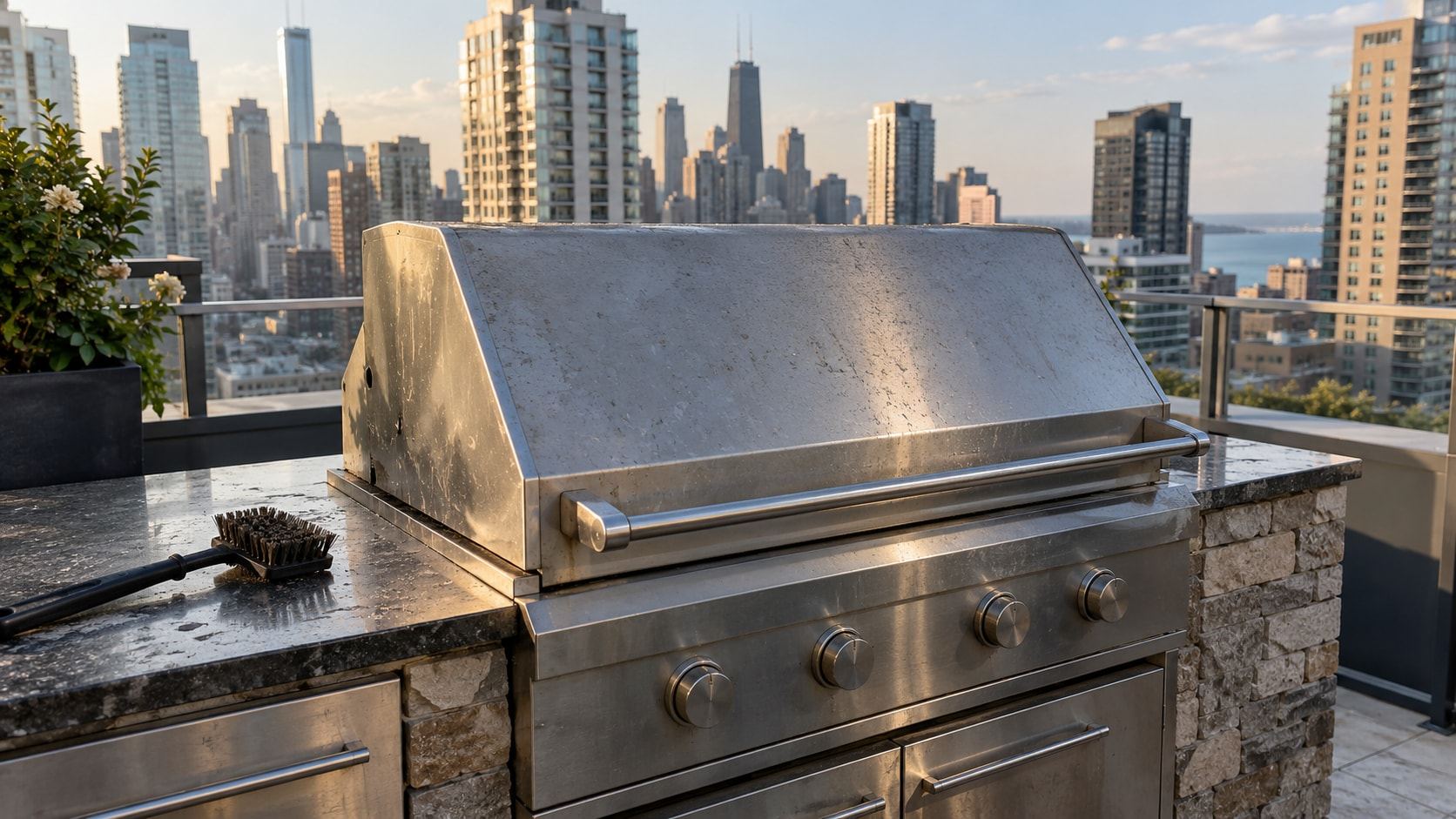
Indoor appliances get a stable room. A Wolf outdoor grill gets wind gusting off the lake, rain driven sideways across an open terrace, humidity that hangs around all summer and a winter that freezes and thaws the same metal again and again. Over seasons that shows up as corroded fasteners, igniter wires that lose contact, insects nesting in burner tubes and hinges that start to bind.
It helps to see the grill as a set of separate zones. The main burners, with a ceramic layer above them to spread and hold the heat, do most of the cooking. An infrared sear zone gives intense radiant heat for crusting steaks. The rotisserie pairs a motor and spit with an infrared burner at the back. Around the grill head there may be side burners, a warming drawer and storage doors, and the knobs and work lights let you cook after dark. Each zone fails in its own way, and a good diagnosis names the zone before it names a part.
The cheapest repair is the one that never happens, which is why we suggest an inspection once a year before grilling season starts. For putting the grill away in the fall, follow our winterization guide.
What fails, zone by zone
Start from what you see at the grill; the cause column tells you which zone the technician will open first.
- A burner will not light, or lights only with a match
- Igniter, its wiring, or ports blocked by debris or insects
- Hot and cold patches across the grates
- Partly clogged burner ports or a damaged ceramic layer over one burner
- Every burner is weak at once
- Gas regulator, a tripped propane tank limiter or a supply problem
- Lid drops, sticks or feels uneven
- Worn or corroded hinges and their supports
- Rotisserie spit stalls or turns in jerks
- Rotisserie motor, a bent spit or an unbalanced load
- Rust spots, flaking or seized screws
- Moisture trapped under a cover, or the grill stored wet
Main burners versus infrared zones
The two kinds of burner on a Wolf grill wear out in different ways, and they are repaired differently too.
Main burners
- Decline gradually: uneven heat, a lazy yellow flame, slow preheat
- Usually caused by grease, debris or insects in the ports and tubes
- Often brought back by clearing the tubes and ports and resetting the ceramic layer
- Each burner has its own igniter, so one can fail while the rest work
Sear zone and rotisserie burner
- Fail more suddenly: no glow, or a glow only in patches
- The ceramic face can crack from impact or cold water on a hot surface
- A cracked face is replaced rather than cleaned
- The rotisserie burner is tested together with the motor and spit
If both kinds of burner are weak at the same time, the burners are rarely the problem. Look at the gas supply and the regulator first.
Why does my Wolf grill heat unevenly?
Uneven heat usually means some burner ports are partly blocked by grease, debris or insects nesting in the burner tubes, or the ceramic layer above a burner has shifted or broken down. Low gas pressure weakens every burner at once instead. Scrubbing the grates will not fix it; the burners and the layer above them need to be inspected.
Terraces, roof decks and townhouse yards
Where the grill stands changes how we plan the visit as much as what is wrong with it.
High-rise terraces in Gold Coast and Streeterville
Grills on upper-floor terraces are exposed to the strongest wind and the least shelter. We work through the building: approval from management or the concierge, a reserved freight elevator and protective coverings on the way through your home.
Old Town townhouse yards
Many Old Town grills sit in private yards and patios behind townhouses and older homes. Tell us whether the way in is through the house or a side gate, so the technician comes prepared.
River North loft decks
Converted loft buildings often have unusual gas and electrical runs. A quick note on how your grill is fed, by a fixed gas line or a tank, saves time on arrival.
The rest of our area
We also reach grills in Near North Side and around the Magnificent Mile. The full list of neighborhoods is on our areas page.
Grill parts and their warning signs
| Part | Its job | Early warning sign |
|---|---|---|
| Main burners | Primary cooking heat | Uneven heat, yellow or sooty flame |
| Igniters | Light each burner | One burner refuses to light |
| Gas regulator | Keeps supply pressure steady | Weak flame on every burner at once |
| Infrared sear zone | High radiant heat for searing | Will not glow, or glows in patches |
| Rotisserie motor and rear burner | Slow roasting on the spit | Spit stalls; rear burner does not light |
| Lid hinges | Hold the lid open and closed | Lid drops, binds or closes crooked |
| Knob lights and work lights | Cooking after dark | Lamps out, knobs dark |
| Side burners and warming drawer | Extra cooking and holding food warm | Weak side flame; drawer stays cold |
What goes into a grill repair quote
The visit costs $89 and is credited toward the repair; the exact price comes after the inspection. These are the things that shape it. See how our pricing works.
- 01Which zone failed
- Clearing main burners is a different job from replacing a sear-zone burner or a rotisserie motor.
- 02Corrosion
- Seized or rusted fasteners take longer to free, and sometimes have to be replaced along with the part.
- 03Parts
- Some parts may be on hand; others have to be ordered, which can mean a return visit to fit them.
- 04Access
- A terrace that needs a freight elevator and protective coverings involves more setup than a ground-level yard.
- 05Gas supply
- Problems upstream of the grill, at the tank, the regulator or the supply line, are traced before any burner is replaced.
Who repairs Wolf outdoor grills in Chicago?
Gold Coast Culinary Repair is an independent company that repairs Wolf outdoor gas grills, side burners and warming drawers in Gold Coast, Streeterville, Near North Side, River North, the Magnificent Mile and Old Town, including grills on high-rise terraces. We answer calls 24/7 and visit daily, 8:00 AM to 6:00 PM. The $89 service call is credited toward the repair.
Outdoor grill questions
- Should I have my grill checked before grilling season?
- Yes. A yearly inspection before the first cookout catches nesting insects, tired igniters, corroded fasteners and a lid that has started to bind, while the fix is still small. Book it in early spring through our booking page.
- How do I get my Wolf grill ready for winter?
- In short: clean it, close the gas supply, fit a cover only when the grill is fully dry, and bring the grates and spit indoors. The step-by-step version is in our winterization guide.
- My flame is yellow and leaves soot. Is that a problem?
- Yes. A yellow, sooty flame means the burner is not mixing enough air with the gas, usually because something is partly blocking the burner tube or ports. It wastes heat and marks food and the lid. Let the grill cool and have the burner inspected before cooking on it again.
- Can you work on a grill on a building rooftop or terrace?
- Yes, as long as the technician can reach it. Ask management whether service visits need approval or a freight elevator reservation, and mention it when you book so we schedule within the building's rules.